Moment's Notice
Reviews of Recent Media
(continued)
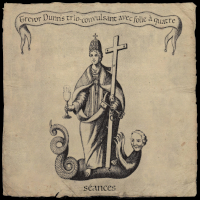
Trevor Dunn’s Trio-Convulsant avec Folie à Quatre
Séances
Pyroclastic PR 21
 In 2004 bassist Trevor Dunn released Sister Phantom Owl Fish on Ipecac Records as the sophomore follow-up to Debutantes & Centipedes (Buzz, 1998), the obscure debut of Trio-Convulsant, his improvising power trio. In the six years between albums, the band’s lineup changed significantly; guitarist Adam Levy and drummer Kenny Wollesen were replaced by relative newcomers Mary Halvorson and Ches Smith, respectively. For many listeners, Sister Phantom Owl Fish was the first time hearing the soon to be ubiquitous sounds of the now acclaimed Halvorson and Smith, making it a milestone for many creative improvised music fans. Now, 18 years later, Dunn finally follows up that seminal recording with Séances, the ensemble’s third proper album.
Dunn’s career arc has followed a somewhat unconventional path; after co-founding the avant-rock band Mr. Bungle in 1985, Dunn went on to work with similar heavy acts like Fantômas, the Melvins, and Tomahawk, eventually becoming a mainstay in the Downtown improv scene centered around John Zorn. Collaborations with Nels Cline, Erik Friedlander, and Dan Weiss soon followed, with Dunn expanding his compositional reach to include the film music of Four Films (Tzadik, 2008), as well as the classical chamber music featured on Nocturnes (Tzadik, 2019), Dunn’s first attempt to pair Trio-Convulsant with a string quartet.
Séances conceptually follows Nocturnes. Reunited with Halvorson and Smith, Dunn augments his trio with Folie à Quatre, a string and wind quartet comprised of violinist/violist Carla Kihlstedt, clarinetist Oscar Noriega, cellist Mariel Roberts, and flutist Anna Webber. Séances is based on the Convulsionnaires of Saint-Médard, an 18th Century French Christian sect whose fevered worship took on the form of ecstatic convulsions and miraculous displays that were eventually banned by the authorities. According to Dunn, “The name of the band comes from a Surrealist concept ... so when I read about the Convulsionnaires it felt like returning back to the origins of that.” Interpreting esoteric historical phenomena through Surrealism’s transgressive concept of “convulsive beauty,” the album invokes aspects of neo-classical chamber music, metal, countrified blues, and avant-garde jazz, to convey the mass hysteria of the Convulsionnaires.
“Secours Meurtriers” begins the program as an overture of sorts, introducing several soloists over a 13/4 ostinato, with Kihlstedt’s feverish extrapolation and Smith’s roiling percussion as highlights. The swaggering country blues of “Saint-Médard” boasts an intricate foundation based on paired instruments working in different time signatures, lending the piece a sense of structural instability, amplified by Halvorson’s phantasmagoric solo excursion. Similarly, Webber’s diaphanous refrains over droning glissandi strings on “Restore All Things” convey an evocative, messianic vision of the apocalypse. “1733” uses numerology to reference the number of the beast, summoning crushing power chords and double-stops to conjure Dunn’s inner ‘80s metalhead. Conversely, Noriega navigates a web of fragile harmony in the melancholy “The Asylum’s Guilt,” while Roberts offers arresting variations. “Eschatology” boasts a series of lively, bop-inflected solos, whereas the closing “Thaumaturge” offers lyrical respite, its lucid melody in 9/4 buoyed by Dunn’s pliant bass.
Dunn has stated that Trio-Convulsant was originally conceived, to “make jazz heavier and make heavy music more harmonically rich.” Séances accomplishes that goal through a compelling fusion of styles, seamlessly interweaving the subtly of chamber music and intricacy of modern jazz with the emotional immediacy of popular forms like metal and folk.
–Troy Collins
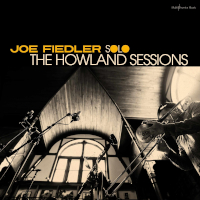
Joe Fiedler
The Howland Sessions
Multiphonics MM 007
 In 1972, producer Joachim-Ernst Berendt organized the Jazz Now! Festival in Munich to coincide with Germany’s first time hosting the Olympics since 1936. Upon learning that Berendt was scheduling a night of solo performances by such luminaries as Chick Corea, John McLaughlin, Jean-Luc Ponty, and Gary Burton, German trombonist Albert Mangelsdorff demanded to be included. Mangelsdorff’s performance that evening subsequently made history as the first solo jazz trombone recital, ushering in a new phase of his burgeoning career. Later that year he made Trombirds (MPS, 1973) the first documented solo trombone recording, following similar seminal efforts by saxophonist Anthony Braxton, bassist Barre Phillips, and drummer Pierre Favre. Mangelsdorff’s appearance at Jazz Now! inspired generations of adventurous trombonists, such as Paul Rutherford, George Lewis, Steve Swell, and Joe Fiedler, whose 2003 trio date, Plays The Music Of Albert Mangelsdorff (Clean Feed), paid tribute to the master’s early music.
Fiedler celebrates the 50th anniversary of Mangeldorff’s landmark appearance at Jazz Now! with his own contribution to the advancement of the solo trombone language, The Howland Sessions. Fiedler has long employed solo sections and cadenzas in his own group performances and decided to use the pandemic lockdown to double his daily practice regimen in preparation for this effort, which was recorded in the Howland Cultural Center in Beacon, New York.
Weaving a thematic arc throughout the session, Fiedler arranged the set with a focus on songlike narratives and dynamic contrasts in structure. Conceptually predating the pandemic, these eight pieces reflect Fiedler’s varied experiences playing with everyone from Satoko Fujii to Eddie Palmieri, as well as his role as musical director for Sesame Street. Fiedler’s protean technique imbues the proceedings with a cohesive sensibility, whether playing sweet or hot; emulating the human voice or electronic textures; or using mutes, circular beathing, multiphonics, and other extended techniques.
Named after a famous Pittsburgh roller coaster, “The Jack Rabbit” opens the date with a vigorous exploration of intervallic multiphonics and plunger muted rhythms that recall Grachan Moncur III’s “The Coaster.” “Otter Cam” is similarly engaging, while “Fiedlowitz Manor” begins as a mellow ballad, climaxing with a rousing shout chorus before resolving as it began. Each piece tackles a different compositional gambit: “The Long No” utilizes circular breathing and pedal tones; “Stinger” explores the potential of a stinger mute to generate rhythmic effects; “Empire Trail” masterfully combines tritones and a blues-like groove; and “Sisyphean” deconstructs Latin clavé into multiphonic ugly beauty. The final number, “‘72,” alluding to the year of Mangesdorff’s first solo recital, explores multiphonic intervals over altered dominant chords.
Unlike Mangelsdorff’s first solo effort, Trombirds, Fiedler eschews overdubs and multi-tracking, opting instead to record “live in the studio.” Although lacking the broad stylistic diversity of Mangelsdorff’s aforementioned album, Fiedler’s unaccompanied excursions embody a more purely acoustic sensibility that lends a sense of intimacy to the proceedings. Inspired by the master’s efforts to expand the possibilities of solo trombone playing, Fiedler pushes the limits of his instrument with focused determination on The Howland Sessions, putting his own personal stamp on a now well-established practice.
–Troy Collins
Dominic Lash + Alex Ward
Antonyms
Copepod POD17
 Clarinetist/guitarist Alex Ward and bassist Dominic Lash have been playing together for close to two decades in various settings including duos, trios, quartets, and large ensembles. Antonyms on Ward’s Copepod label is their second as a duo, following a limited-edition CD recorded back in 2014. This new one, recorded in 2020 in London, features the duo navigating two pieces composed by each as well as a short collective improvisation. Things kick off with Lash’s “Recap” featuring Ward on clarinet and Lash on double bass. The nine-and-one-half-minute piece starts with quavering long reed overtones joined by groaning arco harmonics as the two progressively interweave their respective timbres, often blurring the lines between the instrumental sources. One-third of the way through, the two transition to more angular playing with plucked bass resounding against the warm full tone of clarinet as they gradually amp up the velocity of their playing, moving in tandem across the piece’s structure. Lash’s “Ballast” starts with slow, patient low bass arco and clarinet tones. Ward transitions the piece by introducing a cutting tone which could be either clarinet overtone or guitar feedback and then shifts to flinty shards of guitar distortion before moving to spiky plucked guitar lines that weave in and out of Lash’s freely-walking bass playing. Throughout, their keen sense of balance of densities and levels of activity carry the piece.
“Gegenwort” a concise five-minute collective improvisation follows as spattered clarinet and rumbling bass toss threads back and forth. Ward’s “Unfriendly Manoeuvre” pits jagged, reverb and distortion-tinged electric guitar against Lash’s warm, dusky bass tone. At the start, they leave plenty of space between their ringing notes, building the piece from bristling, fragmented phrases. But again, densities build as they develop a glinting intensity. Ward’s melding of jazz voicings with rock drive and frayed tone works particularly well. The six-minute “Right Shoes” closes things out, starting with popped clarinet and pecked pizzicato bass diving across each other in pointillistic discourse. The two slowly morph their lines into an abstracted melodic theme which they tease apart and piece back together in kaleidoscopic fashion. Ward and Lash continue to document their variegated activities on their respective Copepod and Spoonhunt labels. This duo is a worthy addition to those burgeoning catalogs.
–Michael Rosenstein
John Lely
Meander Selection
Another Timbre at195
 John Lely hit my attention in the early 2000s as an improviser, playing electronics as a member of recorded projects that were an offshoot of Eddie Prévost’s workshop, particularly his trio with Seymour Wright and Yann Charaoui. Less documented was his contemporaneous work as composer and member of the chamber ensemble Apartment House, including performances of pieces he wrote for the ensemble. In 2014 Another Timbre released a recording of Lely’s piece “The Harmonics of Real Strings,” and his work has been included in several other releases on the label. But Meander Selection marks the first recording focusing solely on Lely’s work. The disc is comprised of pieces composed from 2012 to 2020, with four string quartets, two for solo piano, and one for electronics, all masterfully played by members of Apartment House.
The recording starts out with “Doubles” for string quartet, plying shimmering, slowly unfolding harmonics across the four instruments. The four parts progress with a stately patience as the arco strings resolutely ride the gradually welling rise and fall of the five-minute piece. The 2020 piece “Karnaugh Quartet” follows, and here the active patterns of repeated motifs, with velocity that evolves in sections over the course of the duration, offer a propulsive restlessness that unfolds with a striking fortitude. “Pale Signal” for Lely’s abraded electronics provides a brief interlude leading to the title piece for string quartet. Composed for either string quartet or violin, reed organ, and cello, it explores similar territory to “Doubles,” here imbued with a subtle, underlying lyricism which frames the harmonic movement of the deft voicing of the strings. On “Nocturne,” for solo piano, single notes hang against an inky silence, played with quiet attack and full sustain. There is an elusive resonance to the voicing of the notes which hang like spectral shadows across the six-minute composition.
“Stopping At The Sheer Edge Will Never Abolish Space,” for violin, two violas, and cello accentuate the lower registers of the ensemble. The fifteen-and-a-half-minute piece stands out from the others in that here, the lines of each instrument are more distinct, weaving their way in and out of unfaltering, recurring, cyclical motifs. There are also occasional undercurrents of quietly percussive scratches and crinkles that waft through, adding delicate sputters of grit to the shimmering arco. The piece is played with unerring tenacity, delivering a reading of understated sinuous energy. The recording closes with the twenty-minute piano solo, “For Philip,” dedicated to Philip Thomas, a frequent collaborator of Lely’s. Pianist Mark Knoop navigates the measured development of the piece, sounding notes against the resonance of the undamped strings with a meditative poise. Knoop delivers a constancy of pacing, attack, and trajectory, never wavering from the pensive composure of the score. It’s surprising that it has taken over two decades for a recording capturing a selection of Lely’s compositions to appear. Simon Reynell’s usual masterful production and the incisive readings by the members of Apartment House have made insightful inroads into rectifying that with this release.
–Michael Rosenstein