Moment's Notice
Reviews of Recent Media
(continued)
Michael Formanek
New Digs
Intakt CD451
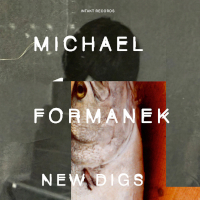 New country, new band, new ideas. Following his relocation to Portugal, bassist Michael Formanek unveils a formidable new band whose morphing textures and uncommon instrumentation invigorate his compositional language. At the core of the septet responsible for New Digs, sit Formanek’s bandmates from the collective trio Thumbscrew, guitarist Mary Halvorson and drummer Tomas Fujiwara. To broaden the palette, he recruits another alum, reed player Chet Doxas along with fellow expat saxophonist John O’Gallagher and Portuguese trumpeter João Almeida. But just in case that doesn’t allow enough options, he deploys a further wildcard by adding erstwhile pianist Alexander Hawkins on Hammond B3.
Notwithstanding the illustrious roll call, Formanek’s nine charts promote bristling group interaction as much as individual fireworks. Every cut defies expectations, reconfiguring mass, granularity, and voicings, yet does so without shooting for the extremes. You could call it the modern mainstream, except that few leaders harness such eclectic means into so cohesive a whole. Two pieces which illustrate the bassist’s approach bookend the majority of the program. Like a well-oiled machine, “New Old World” opens the album with a long undulating unison melody, from which emerges a sequence of solos, which maintain the smoothly flowing feel, even as the backdrops modulate. Also signalling his concern with overall dynamics, Formanek allots space for jostling exchanges between subsets of the band, as if to emphasize the complexity which buttresses the serene progress elsewhere.
In particular it would be easy to overlook the understated excellence of Fujiwara’s precise and elegant propulsion. In some ways the penultimate track, “Quinze” mirrors the introductory offering in its proximity to the jazz canon. However, this time an energetic staccato vibe predominates that would make this flagwaver a worthy set closer. An organ/drum duet cues up a jerky beat that informs everything that ensues, with Hawkins’ popping feature on B3 and Halvorson’s fuzzed effects particularly noteworthy.
That “Quinze” doesn’t close out the disc indicates Formanek’s concept of the Hammond’s place in the ensemble. Instead the final word goes to “Nigh Total”, a thorny but engaging double act between the leader’s bass and the organ that matches rattling pizzicato and Morse code beeps, over a sustained keyboard swell. Organ also plays a prominent role on “Prequel,” where Hawkins channels Lifetime-era Larry Young, topping and tailing some eloquent storytelling from the leader’s resonant bass. Formanek’s ruminative introduction to “Gone Home / Interlude For Susan Alcorn,” his paean for the pedal steel guitarist who died in January 2025, stands among the most fully realized performances. It blossoms into a mournful refrain, adorned by a breathy less-is-more solo from Almeida, and later a keening tenor showcase from Doxas. In a change of density, all three horns vie for center stage on “Braxes,” conversing and bickering, with Formanek’s bass alone to support them.
The leader’s achievement lies in shaping the septet’s abundance of possibilities into music that remains simultaneously exploratory and fully lived-in.
–John Sharpe
Gordon Grdina Nomad Trio
ASH
Attaboygirl ABG 13
Qalandar
Reza
Attaboygirl ABG 10
Gordon Grdina + Russ Lossing
Turnpike
Attaboygirl ABG 12
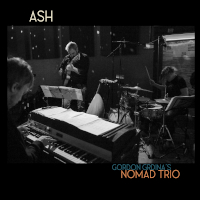
 Canadian composer, guitarist, and oud master Gordon Grdina presents a trio of releases – ASH, Reza, and Turnpike – on his Attaboygirl label, continuing a pattern of issuing albums in groupings that reflect a prolific output fueled by boundless artistic curiosity. Despite the albums’ unique individual settings – contemporary improvisation, Persian classical traditions, and intimate chamber dialogues – a unifying sensibility emerges, defined by technical expertise, a commitment to experimentation, and a dedication to maintaining long-standing musical relationships.
ASH reunites Grdina with pianist Matt Mitchell and drummer Jim Black for a third outing that builds on the elaborate, energetic interplay of their previous work. The trio’s language is rhythmically and harmonically complex, yet malleable, allowing pieces to stretch, fragment, and reunite with precision. Lengthy tracks like “Polysemic,” “Simultaneism,” and “Huzam” illustrate their synchronicity; circular motifs become springboards for angular improvisation, with the group implying structure even as they abandon it, only to return with vigorous resolution. Black’s dynamic propulsion anchors the music, while Mitchell’s protean pianism and Grdina’s incisive fretwork generate a constantly shifting internal logic. The trio’s longstanding rapport yields a finely tuned voice within a turbulent yet controlled environment where adventurousness and restraint coexist.
With Reza, Grdina turns to Qalandar, a contemporary Persian ensemble rooted in classical traditions that embraces improvisation and modern composition. Recorded live, the album captures a veteran acoustic quintet that includes setar player Ali Razmi, drummer Kenton Loewen, and percussionist Hamin Honari. The performance also serves as a tribute to the late Reza Honari, a master of the kamancheh (a traditional Persian bowed spike fiddle), which imbues the music with poignant emotion. The ensemble balances intricate modal interchanges with spaciousness and restraint across extended pieces such as “Nava Meshkatian,” “Raghs Parvaneha,” and “Asrar Azal,” allowing individual voices to coalesce. Shorter numbers such as “Morning Moon” and “Gaza” contribute to a deft ebb and flow, as Persian and Arabic modal traditions intertwine with modern improvisational strategies, honoring tradition while suggesting new exploratory possibilities.
Turnpike offers a more intimate but no less probing encounter, pairing Grdina with Russ Lossing in a rare oud and piano duo setting. Originating from an impromptu encore during a European quartet tour, the collaboration evolved into a repertoire of original compositions, spontaneous improvisations, and a piece by Paul Motian. The duo’s relationship is characterized by patience, space, and subtlety. On a piece like Motian’s “Etude,” the contrasting timbres of oud and piano create a hushed, intimate atmosphere, while more spirited tracks such as “Uh Huh” and “Offramp” reveal nimble, conversational exchanges. Throughout, instrumental roles remain fluid, with melodic clarity and tonal abstraction in perfect balance. Grdina’s distinctive oud simultaneously grounds the music in tradition and expands its sonic possibilities, while Lossing responds with sensitivity and invention.
Together, these three albums craft a portrait of Grdina as a versatile artist of great depth. Whether navigating the volatile interaction of an electro-acoustic trio, the ceremonial intimacy of a Persian classical ensemble, or the quiet dialogue of an acoustic duo, he demonstrates an all-encompassing artistry. Each recording conveys a distinct musical world, yet all contribute to a broader vision – one that bridges traditions, embraces risk-taking, and confirms the collaborative potential of collective music-making.
Together, these three albums craft a portrait of Grdina as a versatile artist of great depth. Whether navigating the volatile interaction of an electro-acoustic trio, the ceremonial intimacy of a Persian classical ensemble, or the quiet dialogue of an acoustic duo, he demonstrates an all-encompassing artistry. Each recording conveys a distinct musical world, yet all contribute to a broader vision – one that bridges traditions, embraces risk-taking, and confirms the potential of collective music-making.
–Troy Collins
LDL – Urs Leimgruber, Jacques Demierre, Thomas Lehn
the eerie glow of jellyfish
Relative Pitch Records RPR1240
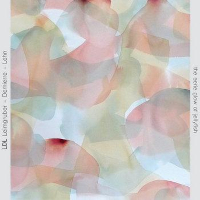 Reed player Urs Leimgruber and pianist Jacques Demierre have been working together for over three decades as a duo and in a trio with bassist Barre Phillips. A decade ago, synth player Thomas Lehn joined that group and Leimgruber, Demierre, and Lehn have continued as a trio since the bassist’s death. the eerie glow of jellyfish is the trio’s second release, recorded live at 2004 Kaleidophon Festival in Ulrichsberg, Austria. Leimgruber’s sprightly soprano sax lines intertwine with the reverberant harmonics of Demierre’s amplified spinet and the shimmers and shudders of Lehn’s analogue synthesizer and sound processing of his partners. Over the course of the 43-minute set, the three traverse a five-part collective improvisation permeated with timbral and textural confluence.
There is a spaciousness to their approach guided by astute listening. Leimgruber, sticking to soprano, probes the upper registers of his horn, delivering darting lines that snake across the intertwined, resonant sheets of his partners’ playing. He moves seamlessly from labyrinthine flurries to breathy shadings to percussively stabbing punctuations. Demierre’s prepared and amplified spinet (a Baroque-era wing-shaped version of a harpsichord) delivers bright spiky layers to the improvisation. His playing incorporates the spare resonance of struck strings, scrims of harp-like sonorities, and shards of block chords, weaving together the acoustic properties of the instrument with amplified reverberation guided by a superlative attention to attack and decay of the strings. Lehn’s piercing oscillations, flickering refractions, and turbulent pulsations provide a commanding vertex to the trio, from pointillistic counterpoint to dense, mutable rumbling walls.
The three guide the improvisation developing in morphing layers that move between minute key pops, string plucks, and electronic squiggles to sections of churning intensity. But even at its most dense, the three never lose sense of the detailed intersections of their playing. Their years of working together is evident throughout as they collectively guide their spontaneous interactions with steadfast attention to collective invention.
–Michael Rosenstein