Moment's Notice
Reviews of Recent Recordings
(continued)
Tom Varner
Heaven And Hell
OmniTone 12210
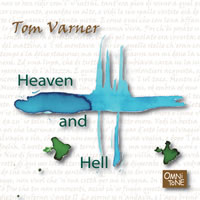 Being an improvising french horn player would seem to carry with it a built-in measure of neglect, but, in addition, despite an impressive fistful of albums for New World, Soul Note, and OmniTone, Tom Varner continues to fly under the radar as a composer and conceptualist. Part of the problem may be that he can’t be easily categorized. His previous OmniTone release, Second Communion (2001), was an homage to Don Cherry that included a gutsy reconsideration of the classic Complete Communion, and now he returns after a long hiatus with an inspired program that soundchecks Messiaen and Stravinsky as unselfconsciously as it does Mingus and Ornette. The resulting blend, bite, and bliss are Varner’s own.
The ambitious concept behind Heaven and Hell has to do with the human response to life’s enormous tragedies (like, specifically, 9/11) and its everyday joys and sorrows. The fifteen-part program – alternating ensemble workouts and evocative vignettes – serves as a contemplation and commemoration, rather than musical illustration, of (in Varner’s words) “the good and bad that is all around us.” Scored for tentet, occasionally divided into smaller combinations, his compositions create shapes that fit together or suggest conflict, colored with an imaginative harmonic framework, and elaborated upon by sensitive solos. The Seattle musicians acquit themselves admirably, primarily by sustaining the varied moods established by the writing – whether the chords-to-counterpoint insistence of “Overview,” the stimulating grooves (with metrical sequences of five, seven, eight, and a meterless frolic) of “The Daily Dance,” the flaring solos amid ensemble cries of warning and concern in “The Trilling Clouds,” the empathy and mystery of “Waltz for the Proud Tired Worriers” (a title with a debt to both Bertolt Brecht and Woody Allen), or the ominous, anxious turmoil of “Structure Down.” The album ends on an uncertain air; Varner is too modest and wise to offer a glib resolution to life’s complexity.
–Art Lange
Albert van Veenendaal
Minimal Damage
Evil Rabbit ERR13
 Albert van Veenendaal plays prepared piano, an idea that in itself gives away little of his approach to the instrument. In practice, he likes melodies tethered to ostinatos and strongly defined rhythmic patterns, and he prepares the piano to emphasize both its percussive and string-like character, developing a host of timbres that will range from mbiri and various marimbas to water and string drums. His preference for scalar patterns and single-note lines emphasizes relationships to eastern and African traditions, sometimes setting up polyrhythmic dialogues between his two hands. Veenendaal describes the pieces here as “Miniatures” and most are short: one, “Old Frogs,” is less than a minute and only two – the opening “Spy and the Vampire” and the title track – are over five minutes. But Veenendaal doesn’t need much time to develop remarkable complexity: “Pirouetteke” is under two minutes and sounds like brilliant hand-drumming on chromatic drums or electronic sound sources. Given his general dedication to the keyboard, Veenendaal‘s occasional forays to the strings are especially noteworthy, as in the piece called “Whales” which mixes string stroking and keyboard thumps in an evocation of animal voices. The only piece credited to another composer is Mingus’s “Goodbye Pork Pie Hat,” which here sounds oddly like John Cage’s early sonatas for prepared piano. It has the tone of reserved lament with which it’s associated, but there’s also a quality that’s both playful and exotic, the engaging sense of a pan-cultural playground that links it to the other music here.
–Stuart Broomer
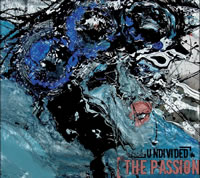
Waclaw Zimpel's Undivided
The Passion
Multikulti MPI 011
 The Mediterranean rites for Passion Week (a typically Catholic celebration) may have a bigger place in the history of jazz than it is commonly acknowledged. New Orleans musicians of Italian origins like tubist Joe Alexandra and Nick LaRocca of Original Dixieland Jazz Band fame were issued from a tradition of brass band playing that included both Opera potpourris and funeral marches adapted or specially composed for the processional rites of Holy Week and Holy Friday, pre-Easter. For examples, look at the recordings by the Banda of Ruvo di Puglia (hometown of Pino Minafra) and Banda Ionica (the LaRocca family was from this area of Sicily). Miles Davis’ “Saeta” and Art Ensemble of Chicago’s “Variations on a theme by Monteverdi” reinterpreted music used for the same occasions. The music for the “Dormition of the Virgin Mary” rites plays a similar role in Orthodox (Greek and Russian) traditions, and it's referenced in “Synnefiasmeni Kyriaki”, the Greek version of “Nuages” – pieces depicting the feelings of the respective countries under Nazi occupation through the metaphor of clouds: Django's mischief is evident in the fake martial introduction to the 1940 recording (with the clarinet and drums group).
When I first put The Passion on without looking at the liner notes, I was slowly impressed and drawn in by the intensity of the sound, the static and tense feeling emanating from the music, and the original phrasing and timbral variety of the reeds, which made sense when I realized that this was yet another set inspired by Passion music, coming from Poland: one of the hotbeds of European music, generally, and a varied, rich jazz scene in particular. Masterminded by clarinetist Waclaw Zimpel, a new name to me (showing how much I know!), and employing Bb clarinet as well as bass clarinet and tarogato (originally a double reed wind of the shenai/zurna family the taragato is a conic wooden instrument re-created as a single reed after the establishment of Hungary as independent state) the all-star international cast includes Bobby Few on piano, German drummer Klaus Kugel, and Ukrainian double bassist Mark Tokar. Drawing from traditional music as well as from composed music and free improvisation, the CD loosely follow a Passion week ritual, starting from Jesus' night of doubt, to meditation, Judas' treason, the triple denial of St. Peter, the Way of the Cross, the despair of followers and Mary at the Crucifixion, and the final Resurrection on Easter. Beautifully packaged with suitably stark but impressive visual arts, not very clearly credited, listening to the CD is an intense experience, not different from following a classic cycle of frescoes telling those stories in an ancient Italian (or Polish, as the case might be) village church. There are some puzzling passages in the English version of the notes: one refers to “overcomposed themes” and the other to “translating the evangelical texts into well-tempered tones” – there are plenty of bad-tempered tones here, especially from the clarinet, and I mean it as a compliment, as they are tones that Ornette or a klezmer clarinetist could use.
The theme of human suffering – on which the enduring meaning of the Passion story is based – is a key component of the African-American musical tradition, and Few fits perfectly here with his blue feelings mixed with Chopin. Kugel (who functioned also as a sound technician, creating a detailed but warm recording) is open and sensitive to the utterings of the soloists, carefully using his solo spaces for dramatic effect, his contribution ranging from scrapings and crackling to thunders and booms in the background. Tokar does not play all the time, which sounds natural but it's in fact a freedom bass players are not allowed in more academic forms of jazz, so his interjections are more meaningful, both in powerful pizzicato and vocalizing arco. Zimpel goes from wordless cry to perfectly rounded melodies, leading a musical discourse that cannot fail to move the listener. Zimpel's name goes straight into the list of European jazzmen that gave new life to clarinet and bass clarinet, continuing Dolphy's example: Surman, Sclavis, Trovesi, and the like.
–Francesco Martinelli